
Data Science Training in Mohali: Learn Data Science, AI & Machine Learning
Are you looking to build a career in data science, artificial intelligence, and machine learning? With businesses increasingly using data to improve decisions, automate processes, understand customers, and develop intelligent applications, data science has become an important technology skill.

If you are searching for data science training in Mohali, The Core Systems provides practical, career-focused training designed for university students, freshers, and working professionals.
The course combines Python, data analytics, statistics, machine learning, artificial intelligence, data visualization, and practical projects to help learners understand how data science is applied in real-world situations.
Rather than focusing only on theory, the training emphasizes hands-on learning, project development, problem-solving, and industry-oriented skills.
Whether you are starting from the basics or already have programming experience, a structured data science course in Mohali can help you build a strong foundation for a career in analytics and AI.

Why Learn Data Science in Mohali?
Mohali has developed into an important technology, education, and business hub in the Punjab region. Along with nearby Chandigarh and other areas of Punjab and Haryana, the region has opportunities across software development, IT services, analytics, automation, and technology-driven businesses.
Data science skills can be applied across many industries, including:
- IT and software development
- Finance and banking
- Healthcare and biotechnology
- Retail and e-commerce
- Marketing
- Manufacturing
- Education
- Logistics
- Business services
For students and professionals, learning data science locally can provide access to structured training while allowing them to work on practical projects.
The objective of a good data science training program in Mohali should be more than completing a syllabus. It should help learners understand how to collect, clean, analyze, visualize, and model data.
What Is Data Science?
Data science is a field that combines programming, statistics, mathematics, data analysis, and machine learning to extract useful information from data.
A typical data science workflow may look like this:
Data Collection → Data Cleaning → Data Analysis → Visualization → Machine Learning → Evaluation → Insights
For example, a business may have thousands of customer records. A data scientist can analyze this information to understand customer behavior, identify patterns, predict future outcomes, or support better business decisions.
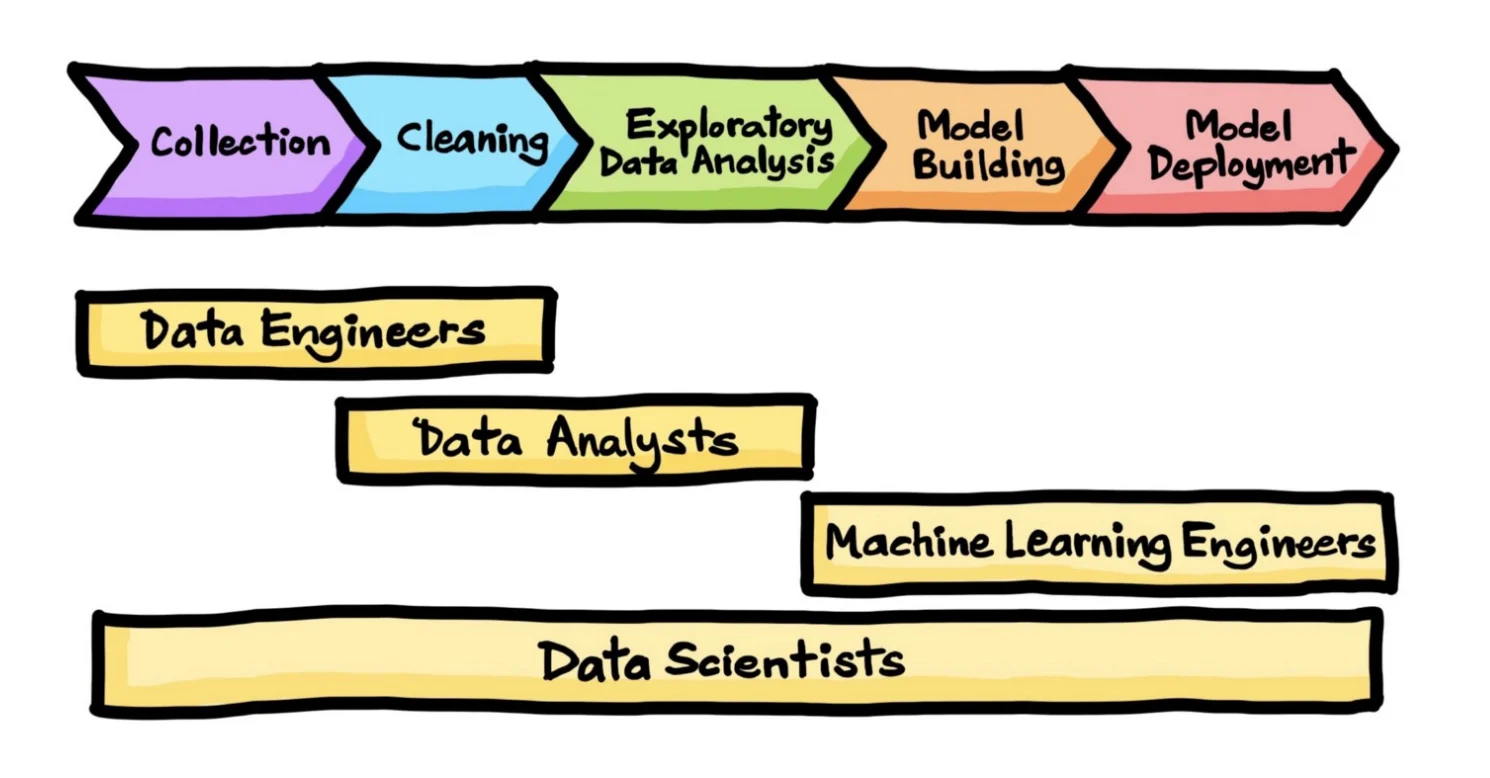
This makes data science different from simply creating spreadsheets or charts.
It combines technical skills and analytical thinking to solve practical problems using data.
Who Should Join a Data Science Course in Mohali?
A data science course can be useful for learners from different educational and professional backgrounds.
University Students
Students pursuing B.Tech, BCA, MCA, B.Sc., M.Sc., MBA, biotechnology, or other technical and analytical programs can use data science training to develop practical skills alongside their academic education.
Freshers
A data science course in Mohali for freshers can start with programming and data analysis fundamentals before progressing to machine learning and AI.
Freshers do not necessarily need to know advanced mathematics or machine learning before beginning. A structured learning path can introduce these concepts gradually.
Working Professionals
Professionals from software, analytics, engineering, business, or related fields can learn data science to expand their technical skill set or move toward data-oriented roles.
Data Science Course in Mohali for Freshers
Starting data science as a fresher can seem difficult because the field includes several technologies.
A beginner-friendly learning path can make the process easier.
The learning journey can start with:
- Python programming
- NumPy and Pandas
- Data cleaning
- Data visualization
- Statistics
- SQL and databases
- Machine learning
- AI fundamentals
- Practical projects
- Portfolio development
This gradual approach allows freshers to develop a strong foundation before moving into advanced concepts.
The most important thing for beginners is consistent practice.
You do not need to memorize every Python function or machine learning algorithm. You need to understand the concepts and know how to apply them to real problems.
Comprehensive Data Science Training Curriculum
A practical data science program should cover the complete journey from programming fundamentals to applied AI.
At The Core Systems, the curriculum can be structured around the following areas.
Module 1: Python Programming for Data Science
Python is one of the most commonly used programming languages in data analysis and machine learning.
Students begin by learning programming fundamentals such as:
- Variables and data types
- Operators
- Conditional statements
- Loops
- Functions
- Lists and dictionaries
- File handling
- Exception handling
- Object-oriented programming
- Working with data
After learning the fundamentals, learners can move toward Python libraries used in data science.
Module 2: NumPy, Pandas & Data Analysis
Data scientists frequently work with structured datasets.
NumPy helps with numerical operations and arrays, while Pandas provides tools for working with tabular data.
Students can learn how to:
- Load datasets
- Explore data
- Filter records
- Handle missing values
- Remove duplicates
- Transform columns
- Group data
- Combine datasets
- Perform basic statistical analysis
These skills form an important foundation for practical data science.
Module 3: Data Visualization

Raw numbers are often difficult to understand.
Visualization helps transform data into a form that makes patterns and trends easier to identify.
Students can learn to create visualizations using tools such as:
- Matplotlib
- Seaborn
- Plotly
- Power BI
Common visualizations include:
- Bar charts
- Line charts
- Histograms
- Scatter plots
- Box plots
- Interactive dashboards
The goal is not simply to create attractive charts. The goal is to communicate useful information clearly.
Module 4: Statistics for Data Science
Statistics plays an important role in understanding data.
The training can introduce concepts such as:
- Mean
- Median
- Mode
- Variance
- Standard deviation
- Probability
- Distributions
- Correlation
- Sampling
- Hypothesis testing
These concepts help learners understand data and evaluate analytical results.
A strong foundation in statistics also makes machine learning concepts easier to understand.
Module 5: Machine Learning
Machine learning allows computers to identify patterns in data and use those patterns to make predictions or classifications.
Students can learn the difference between supervised and unsupervised learning.
Supervised Learning
Common algorithms include:
- Linear Regression
- Logistic Regression
- Decision Trees
- Random Forest
- Other classification and regression techniques
These models can be used for problems such as predicting values or classifying records.
Unsupervised Learning
Students can explore techniques such as:
- K-Means clustering
- Hierarchical clustering
- Dimensionality reduction
These methods can help discover patterns in datasets where predefined labels are not available.
Module 6: Machine Learning Model Evaluation
Building a model is only one part of machine learning.
Learners also need to understand how to evaluate model performance.
Important concepts include:
- Training and testing data
- Model accuracy
- Precision
- Recall
- F1 score
- Confusion matrix
- Regression metrics
- Cross-validation
This helps students understand whether a model is performing appropriately instead of assuming that every prediction is correct.
Module 7: Artificial Intelligence & Advanced Data Science
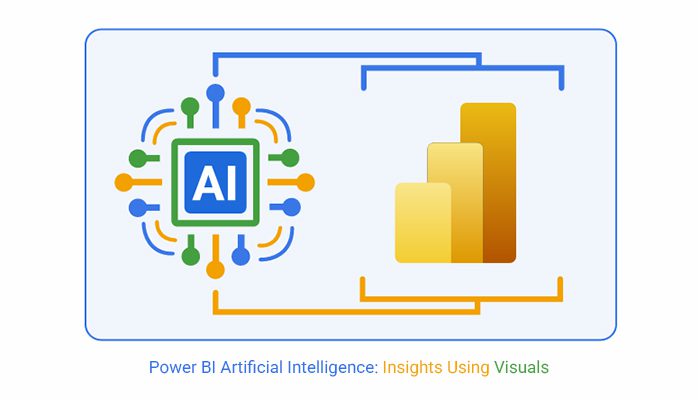
Data science increasingly overlaps with artificial intelligence.
Students can be introduced to AI concepts and applications such as:
- Intelligent automation
- Natural language processing
- Recommendation systems
- Predictive analytics
- Computer vision
- AI-assisted applications
Depending on the course level, learners can also explore neural networks and deep learning concepts.
The purpose is to understand how AI techniques can be applied to real-world problems.
Module 8: NLP and Text Analytics
Natural Language Processing allows computers to work with human language.
Students can explore applications such as:
- Text classification
- Sentiment analysis
- Keyword extraction
- Text preprocessing
- Chatbot development
- Document analysis
For example, customer reviews can be processed to determine whether feedback is generally positive, negative, or neutral.
This creates opportunities to combine Python, NLP, data analysis, and AI in practical projects.
Module 9: SQL and Database Fundamentals
Data is often stored in databases rather than simple Excel files.
Basic SQL knowledge can therefore be valuable for data science learners.
Students can learn:
- Database concepts
- Tables
- Queries
- Filtering
- Sorting
- Aggregation
- Joins
- Data extraction
Combining SQL + Python + Power BI + machine learning can create a strong foundation for modern data-related roles.
Module 10: Cloud Computing, AWS & Linux
Modern data applications increasingly use cloud infrastructure.
Students can be introduced to cloud concepts and learn how cloud services support:
- Data storage
- Application deployment
- Data processing
- Machine learning applications
- Scalable computing
Linux fundamentals can also help learners become comfortable working with development and server environments.
[Keep your existing AWS training image here]
Why Choose The Core Systems for Data Science Training in Mohali?
Choosing a training provider is an important decision.
The Core Systems is a software development and AI-driven company providing training across areas such as:
- Data Science
- Artificial Intelligence
- Data Analytics
- Python
- Full-Stack Development
- MERN Development
- IoT and IIoT
- Embedded Systems
- AWS Cloud Computing
- Cyber Security
- Linux
This broader technology environment allows learners to understand how data science connects with other areas of software and technology.
The organization works with students and industry professionals and develops corporate and industrial projects across Chandigarh, Mohali, Punjab, Haryana, and nearby regions.
Practical Learning Through Real-World Projects
One of the most important parts of data science training is project work.
Reading about machine learning algorithms is not enough. Learners need to understand how those algorithms are applied to actual datasets.
A project-based approach can include:
- Understanding the problem
- Collecting or using a dataset
- Cleaning the data
- Exploring patterns
- Creating visualizations
- Selecting an appropriate model
- Evaluating results
- Presenting findings
This process helps students understand the complete data science workflow.
Projects You Can Build During Data Science Training
1. Sales Prediction Project
Create a machine learning model that analyzes historical sales information and predicts future sales trends.
Students can practice:
- Data cleaning
- Exploratory data analysis
- Regression
- Model evaluation
- Data visualization
2. Customer Churn Prediction
Analyze customer information to identify patterns associated with customer churn.
The project can include:
- Data preprocessing
- Exploratory analysis
- Classification
- Model evaluation
- Visualization
3. Sentiment Analysis Project
Build a text analysis application that processes customer reviews and identifies sentiment.
This combines:
Python + NLP + Machine Learning + Data Visualization
4. Data Analytics Dashboard
Create an interactive dashboard using Power BI to present business information.
A dashboard could display:
- Sales
- Revenue
- Product performance
- Customer trends
- Regional performance
- Monthly changes
5. IoT Data Analytics Project
Data science can also be combined with IoT.
A project can collect sensor information, analyze trends, identify unusual patterns, and present the results through a dashboard.
This demonstrates how IoT + Data Analytics + AI can work together.
Data Science Training in Mohali vs Learning Only Online
Online tutorials are useful, but many beginners struggle with consistency and practical implementation.
| Learning Approach | Practical Guidance | Projects | Doubt Support | Suitable For |
|---|---|---|---|---|
| Self-learning | Limited | Depends on learner | Limited | Experienced learners |
| Online course | Moderate | Usually included | Varies | Flexible learners |
| Classroom training | High | Often structured | Direct | Beginners |
| Industry-focused training | High | Practical | Direct | Career-focused learners |
The best option depends on your learning style, schedule, budget, and career goals.
For beginners, guided practical training can reduce the time spent struggling with basic setup and common errors.
Career Opportunities After Data Science Training
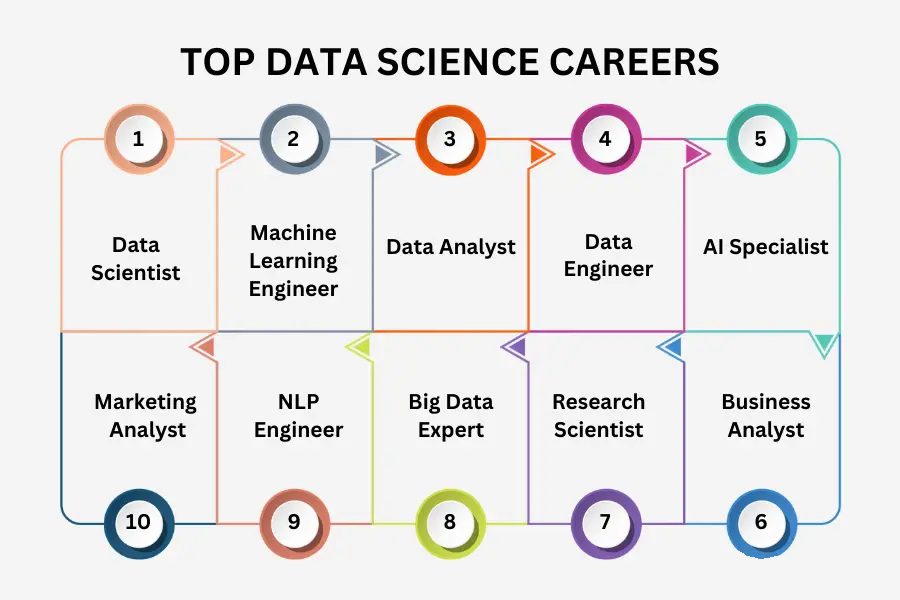
Data science skills can support different career paths.
Depending on your qualifications and practical skills, possible roles include:
- Data Analyst
- Junior Data Scientist
- Machine Learning Engineer
- Business Intelligence Analyst
- Data Science Intern
- Python Developer
- AI/ML Intern
- Business Analyst
Your career path will depend on your broader skill set, project experience, academic background, and interview performance.
For freshers, building a portfolio with 2–4 meaningful projects can be more useful than simply listing technologies on a resume.
Build a Strong Data Science Portfolio
A portfolio allows recruiters and employers to see what you can actually build.
Your portfolio can include:
- GitHub projects
- Data analysis notebooks
- Machine learning projects
- Power BI dashboards
- Python applications
- AI projects
- Project documentation
For every project, explain:
Problem → Dataset → Approach → Technology → Result
This makes your work easier for others to understand.
Career Support and Interview Preparation
Technical knowledge is only one part of becoming job-ready.
Learners can also benefit from guidance in:
- Resume preparation
- GitHub profile development
- Project presentation
- Technical interviews
- Python interview questions
- SQL practice
- Machine learning interview concepts
- Communication skills
The goal should be to help learners confidently explain what they built, why they built it, and how it works.
Data Science and AI: A Powerful Career Combination
Data science and AI are closely connected, but they are not exactly the same.
Data science focuses heavily on working with data, finding patterns, generating insights, and supporting decisions.
AI focuses on creating systems that can perform tasks that typically require intelligent behavior.
Learning both can give students a broader technical foundation.
A possible career learning path is:
Python → Data Analytics → Statistics → Machine Learning → AI → Projects → Portfolio
This provides a logical progression for beginners.
How to Choose the Right Data Science Course in Mohali
Before enrolling, compare the course carefully.
Look for:
Practical Projects
Does the course include real datasets and complete projects?
Strong Python Foundation
Does it teach Python from the basics if you are a beginner?
Machine Learning
Does the syllabus include both fundamental and practical machine learning?
Data Visualization
Does the course teach learners how to communicate insights?
AI Exposure
Does it introduce modern AI applications?
Industry Orientation
Does the training connect technical concepts with practical business problems?
Career Guidance
Does the program help with resumes, portfolios, and interview preparation?
Do not select a course only because of its certificate. Practical skills and project experience should be major factors in your decision.
Data Science Training in Chandigarh and Nearby Areas
Learners searching for training in Mohali may also compare options in Chandigarh, Zirakpur, Panchkula, and other nearby areas.
Because Mohali and Chandigarh form a connected technology and education region, students can consider programs based on:
- Course curriculum
- Trainer experience
- Practical projects
- Training format
- Location
- Schedule
- Career support
The right choice is the one that matches your learning requirements and career goals, rather than simply choosing a course based on location.
Start Your Data Science Journey with The Core Systems
Building a career in data science takes more than watching tutorials or collecting certificates.
You need to learn concepts, write code, work with data, build projects, solve problems, and explain your results.
The Core Systems provides technology-focused training for students and industry professionals across areas including Data Science, AI, Data Analytics, Python, Full-Stack Development, IoT, AWS Cloud Computing, Cyber Security, Linux, and Embedded Systems.
If you are looking for data science training in Mohali, the right starting point is a structured program that takes you from fundamentals to practical applications.
Whether you are a fresher, university student, or working professional, start with the fundamentals and gradually build your expertise in Python, data analytics, machine learning, AI, and visualization.
Contact The Core Systems to discuss the Data Science with AI and Agentic AI training program, upcoming batches, course structure, and practical project opportunities.