
Best Industrial Training for ECE Students: Build Career-Ready Engineering Skills
Electronics and Communication Engineering (ECE) stands at the crossroads of modern hardware design and advanced software intelligence. For ambitious engineering undergraduates and fresh diploma holders, academic textbooks lay the conceptual groundwork, but practical workplace mastery demands hands-on execution. Pursuing specialized Industrial Training for ECE Students bridges the gap between academic theory and real-world implementation.
Today, industries across automation, smart telecommunications, and intelligent electronics demand engineers who can write clean firmware, build connected devices, and integrate machine learning intelligence directly into silicon. At The Core Systems, a premier software development and AI-driven company, we help engineering candidates transition smoothly from university classrooms to high-impact technical roles. Choosing the right Industrial Training transforms your foundational knowledge into market-ready engineering capability.

The Evolving Landscape of Electronics and Communication Engineering
Engineering education is experiencing a massive shift toward software-defined hardware and connected computing. Traditional bench testing alone no longer satisfies the technical benchmarks of modern electronics firms.
Bridging the Gap Between Academics and Industry
University curricula provide essential mathematical frameworks and fundamental circuit theories. However, fast-paced commercial projects require practical exposure to production workflows, automated diagnostic tools, and collaborative version control. Engaging in structured Industrial Training for ECE Students ensures that you do not face a steep learning curve after graduation.
The Rise of Smart Embedded Systems and Connected Devices
Electronics are no longer isolated circuit boards operating in silos. Every modern gadget—from smart wearables to industrial sensors—is networked. Modern Industrial Training helps students comprehend how microcontrollers gather sensor inputs, process data locally, and push real-time telemetry across modern networks.
Why Software Skills Are Crucial for Modern Hardware Engineers
A successful electronics engineer must master code alongside schematics. Programming environments such as Python and foundational Linux have become indispensable for prototyping, data analysis, and peripheral scripting. Modern Industrial Training in Mohali emphasizes full-stack technical literacy so engineers can communicate across hardware, firmware, and cloud layers.
Core Technical Tracks in Industrial Training for ECE Students
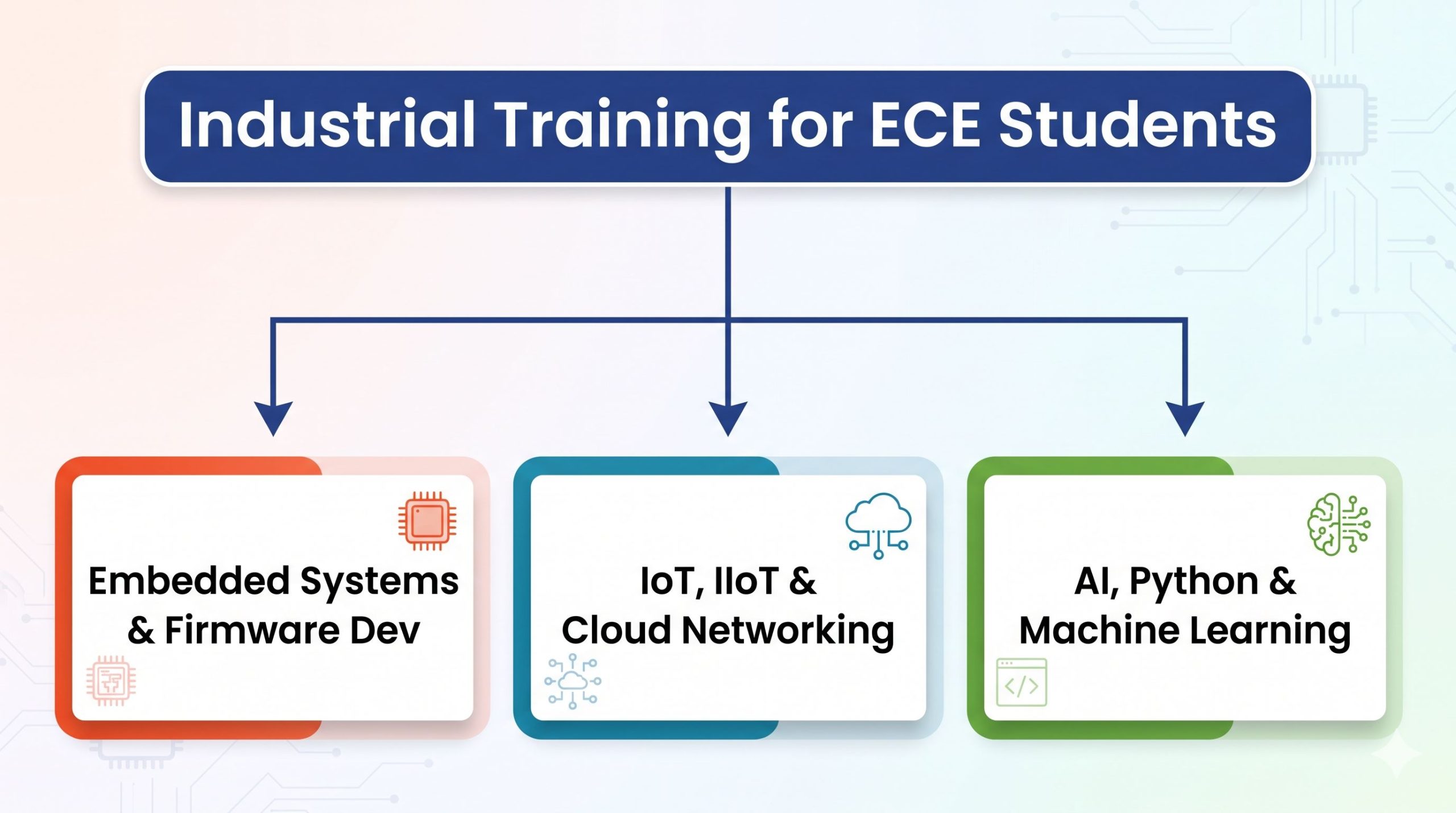
To stand out in competitive hiring drives, ECE candidates must select technical tracks that reflect current industrial demands. Below are the core disciplines integrated into modern industrial training programs.
Advanced Embedded Systems and Firmware Development
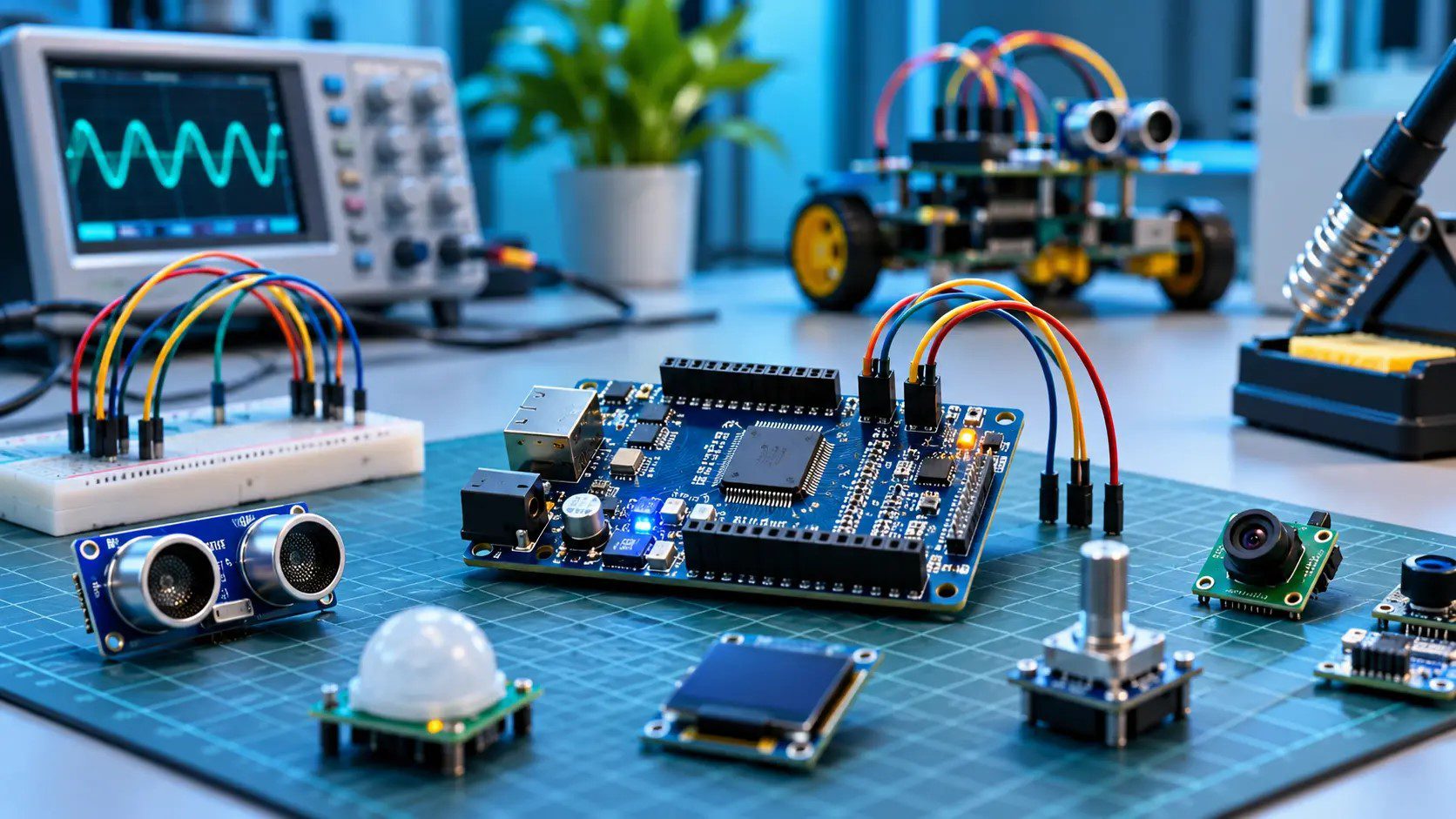
Firmware serves as the operational brain of electronic hardware. Engineers learn how to interface digital and analog sensors, configure serial communication buses, manage interrupt service routines, and write memory-efficient code for real-time control.
Internet of Things (IoT) and Industrial IoT (IIoT)
Connected industrial infrastructure relies on smart telemetry nodes. In this track, students explore sensor data collection, edge analytics, industrial networking architectures, and telemetry streaming. Discover how modern factories deploy intelligent monitoring via.
Programmable Logic Controllers (PLC) and Industrial Automation
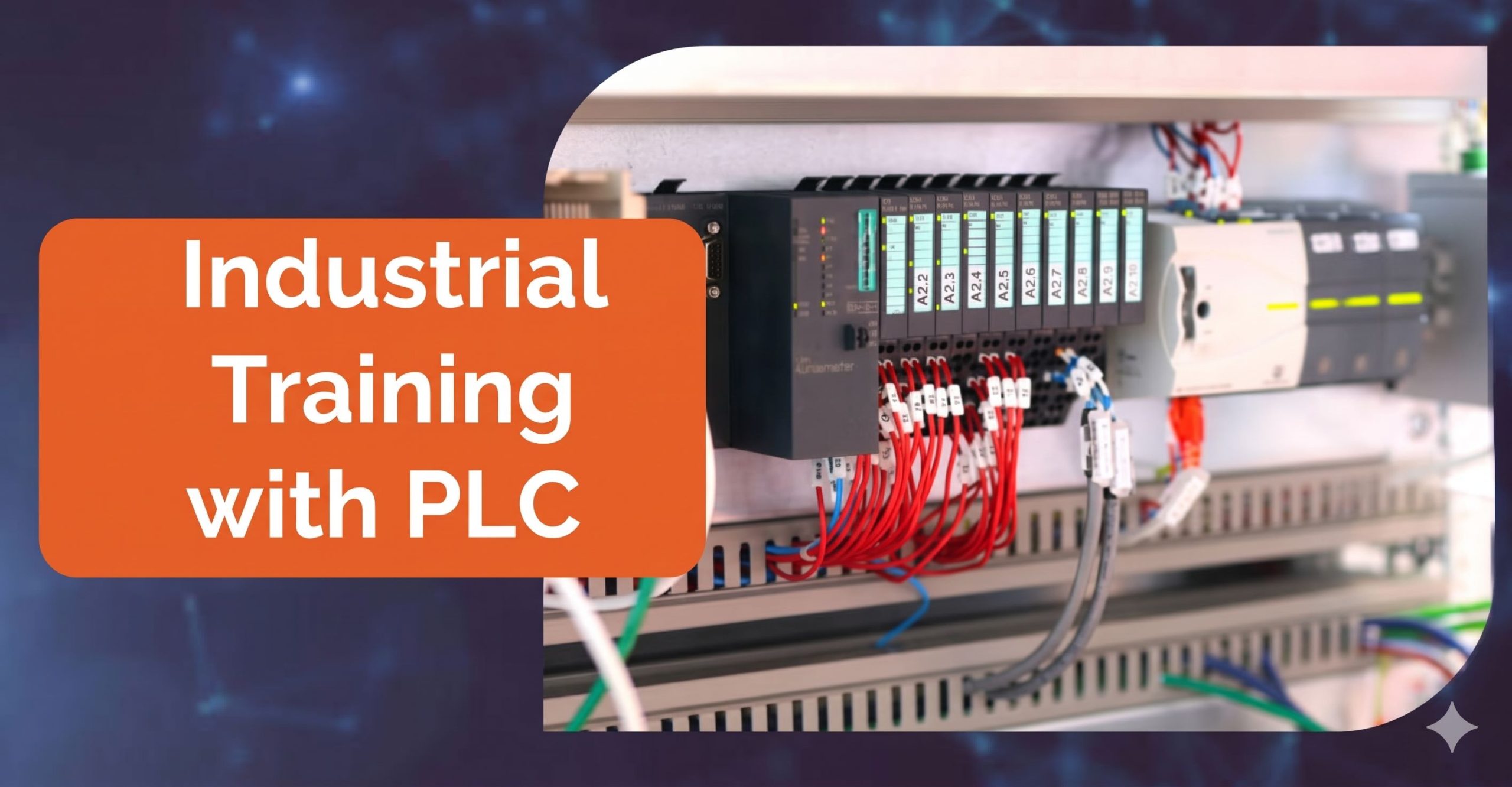
Modern manufacturing plants rely on rugged automated controllers to run assembly lines, packaging units, and heavy machinery without downtime. Through comprehensive Industrial Training for ECE Students, learners explore ladder logic programming, relay logic, sensor integration, human-machine interface (HMI) design, and supervisory control workflows. Gaining hands-on exposure to PLC systems equips electronics engineers to step directly into plant automation, process control, and core industrial engineering roles.
Artificial Intelligence and Edge Computing
AI is moving directly onto edge processors and microcomputing boards. Through specialized Industrial Training for ECE Students, participants learn to deploy lightweight machine learning models for anomaly detection, automated optical inspection, and predictive maintenance without relying constantly on cloud servers.
Python Programming and Linux System Administration
Python is the undisputed language for automation, rapid algorithm prototyping, and test automation. Paired with Linux system administration skills, students gain complete control over embedded operating systems, headless development boards, and network configurations.
Cloud Computing and Telemetry Infrastructure
Modern connected products interface directly with cloud computing backends like AWS. Learning how edge devices publish data to cloud endpoints, trigger automated alerts, and archive logs gives ECE candidates an exceptional competitive advantage.
Why Choose The Core Systems for Industrial Training in Mohali?
Finding the right training partner dictates the practical value of your industrial exposure. The Core Systems provides an immersive engineering environment rather than conventional classroom lectures.
Decades of Industry Leadership and Technical Expertise
Operating as an active software development and technology innovation hub, The Core Systems brings decades of operational experience to technical education. Students interact directly with practicing technical specialists who design commercial products every day.
Proven Excellence Across the Tricity and Northern India
Our roots run deep across the regional technology landscape. We develop enterprise-grade corporate and industrial projects in Chandigarh, Mohali, Punjab, Haryana, and nearby industrial corridors. Taking up Industrial Training in Mohali places you right at the heart of this vibrant northern technology corridor.
Live Project-Based Learning Methodology
We replace rote memorization with practical laboratory execution. Every candidate enrolled in our Industrial Training for ECE Students works on live project modules, solving real engineering challenges under direct mentor guidance.
Comprehensive Curriculum Breakdown
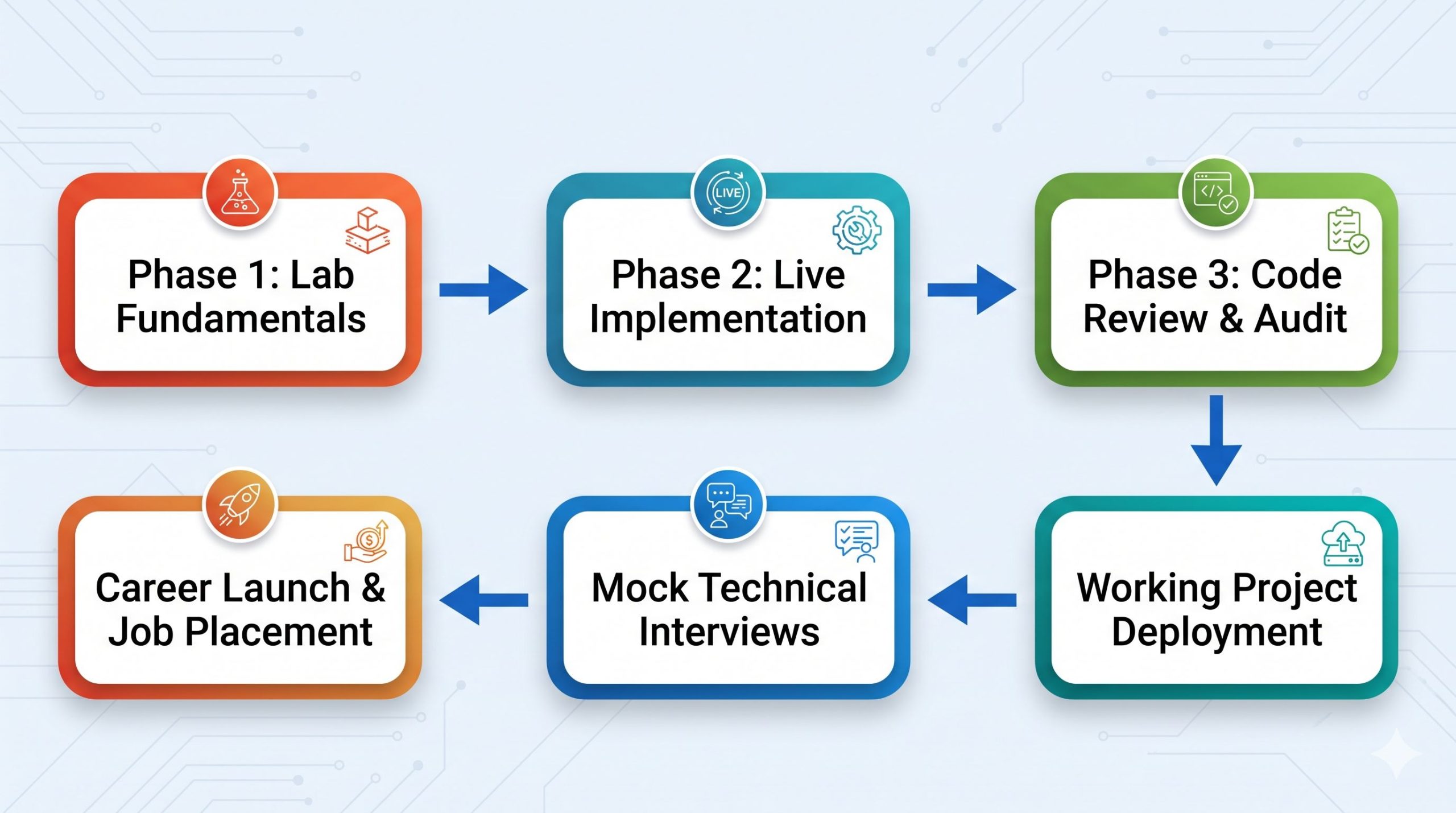
Our technical tracks are engineered around systematic progress, taking students from core fundamentals to advanced project deployment.
Module 1: Electronics Fundamentals and Circuit Simulation
- Reviewing passive and active electronic components in commercial applications.
- Schematic capture and circuit layout simulation techniques.
- Proper utilization of digital storage oscilloscopes, logic analyzers, and multimeters.
Module 2: Microcontroller Architecture and Programming
- Core architectures of 8-bit, 32-bit, and ARM-based computing cores.
- Setting up development toolchains, cross-compilers, and debuggers.
- General Purpose Input/Output (GPIO) programming, timers, and PWM generation.
- Serial data handling using standard communication channels.
Module 3: Sensor Integration and Signal Conditioning
- Interfacing digital temperature, humidity, pressure, and optical sensors.
- Analog-to-digital converter (ADC) calibration and noise filtering.
- Relay switching, optoisolators, and motor driver control circuits.
Module 4: Connected Systems and IoT Protocols
- Fundamentals of wireless networking for embedded applications.
- Publish-subscribe messaging models and lightweight communication rules.
- Creating local dashboards to track sensor readings in real time.
Module 5: Python Automation and Embedded Linux
- Python syntax, data structures, and automation scripting.
- Interacting with hardware ports through Python scripts.
- Navigating the Linux shell, configuring environment paths, and managing permissions.
Module 6: Edge AI and Machine Learning Concepts
- Fundamentals of machine learning for physical sensor datasets.
- Training lightweight classification models using Python libraries.
- Running inference on local processing boards for real-time decision-making.
The Industrial Training Experience in Mohali
Mohali has rapidly transformed into a premier IT, industrial automation, and research hub in Northern India. Pursuing Industrial Training in Mohali offers regional and logistical advantages that help launch your technical career.
Proximity to Thriving Industrial Hubs
Mohali shares borders with Chandigarh and Panchkula, forming a dynamic tricity ecosystem packed with technology enterprises, electronics manufacturing units, and research facilities. Enrolling in Industrial Training in Mohali exposes candidates to professional networking events, hackathons, and corporate engineering cultures.
State-of-the-Art Laboratory Infrastructure
At The Core Systems, our workstations are equipped with modern test equipment, regulated power supplies, diagnostic tools, and contemporary software IDEs. This authentic working environment simulates actual corporate research and development units.
Key Benefits of Industrial Training for ECE Students
Investing focused time into practical development yields substantial returns for your engineering career trajectory.
1. Tangible Portfolio and Real Project Experience
Instead of presenting a generic resume, graduates of our Industrial Training for ECE Students showcase working technical projects, complete with documented source code, functional flowcharts, and system schematics.
2. Industry-Recognized Certification
Completing rigorous, performance-assessed training awards you an authentic certificate backed by an established software and technical development company. This credential adds verifiable credibility to your job applications.
3. Preparation for Technical Job Interviews
Our mentors prepare you for real recruitment cycles through mock technical interviews, algorithmic problem-solving, hardware debugging assessments, and circuit analysis drills.
4. Cross-Disciplinary Technical Fluency
Modern engineers must understand both hardware constraints and software development patterns. Our training provides dual fluency across electronic circuits, system firmware, Python scripting, and network interfaces.
Career Pathways After Completing Industrial Training
Completing specialized Industrial Training for ECE Students opens doors to multiple professional engineering roles across sectors.
Embedded Software Engineer
Design, write, and debug low-level firmware for consumer electronics, automotive controllers, and medical diagnostic instruments.
IoT Solutions Architect
Plan, develop, and supervise the deployment of connected hardware nodes, gateway infrastructure, and real-time operational telemetry platforms.
Firmware Verification and Test Engineer
Develop automated test benches, build Python-based diagnostic routines, and ensure commercial hardware designs meet strict performance standards.
Hardware-Software Integration Specialist
Act as the vital link between hardware engineering teams and cloud platform developers, validating sensor pipelines and secure telemetry streaming.
Automation and Controls Engineer
Deploy smart computing controllers and monitoring systems across manufacturing facilities, logistics hubs, and processing plants.
How The Core Systems Ensures Maximum Career Readiness
Our comprehensive programs combine technical rigor with soft skill development, mentoring, and professional portfolio reviews.
Dedicated One-on-One Mentorship
Every student works under experienced technical engineers who review project code, inspect prototype wiring, and guide systematic troubleshooting.
Systematic Code Reviews and Best Practices
Writing code that functions is only the baseline; writing modular, well-commented, and maintainable software distinguishes top engineers. Mentors conduct regular code reviews to instil professional engineering standards.
Final Capstone Project Presentation
Every program concludes with an end-to-end capstone project defense where students present their engineering documentation, demonstrate real-time hardware operation, and answer live questions from technical leads.
How to Get Started with Industrial Training
Stepping into a high-growth engineering role begins with an intentional, practical learning roadmap. Whether you require a 6-week summer program or a 6-month semester-long internship, The Core Systems provides modular learning tracks suited to your academic calendar.
Students and aspiring professionals across Chandigarh, Mohali, Punjab, and Haryana are invited to visit our technical labs, review our project showcases, and consult directly with our technical advisors. Secure your seat in our upcoming cohort for Industrial Training in Mohali and take the definitive step toward building a successful engineering career.
Frequently Asked Questions (FAQ)
What is the recommended duration for Industrial Training for ECE Students?
Why is Mohali a preferred location for engineering training?
Do I need prior coding experience before joining this industrial training program?
Are weekend or evening training batches available for working professionals?
Contact Us