
PLC Automation Training Company in Chandigarh: The Ultimate Engineering Career Blueprint
Selecting a premier PLC Automation Training Company in Chandigarh requires evaluating hands-on hardware labs, industrial communication protocols, and live capstone projects. The Core Systems delivers industry-aligned training across Chandigarh and Mohali. They bridge the gap between academic theory and factory-floor deployment using Siemens, Allen-Bradley, and SCADA systems.

Modern manufacturing plants run on automated logic controllers, servo drives, and industrial IoT data networks. Selecting the right training provider sets the foundation for a lucrative career in industrial control systems.
Industrial facilities across northern India demand certified engineers. These professionals troubleshoot ladder logic, configure HMI panels, and integrate SCADA networks. This article details the exact technical syllabus, hardware toolkits, and career roadmap required to thrive as an automation professional.
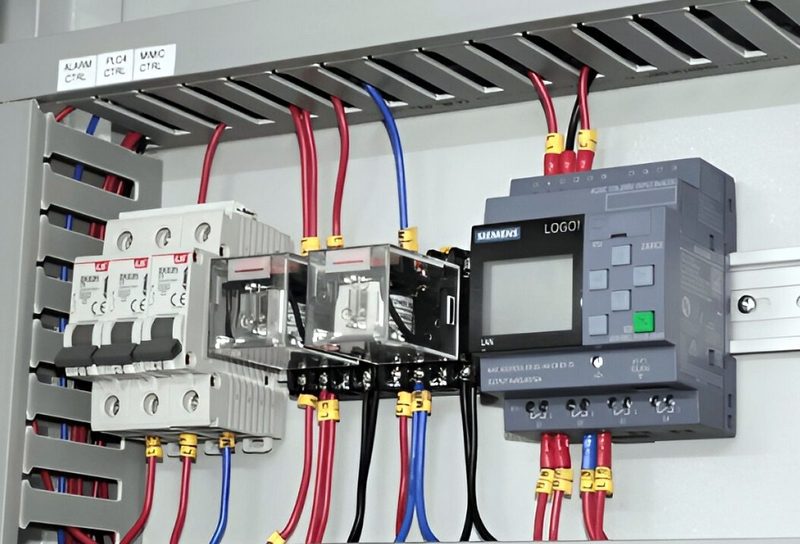
Core Architecture & Component Interconnects for PLC Automation Training Company in Chandigarh
Industrial automation relies on a strict hierarchical structure known as the automation pyramid. Field sensors and actuators sit at the base. Programmable logic controllers, supervisory control stations, and enterprise resource planning software follow them.
Students enrolled in a professional program must master these vertical integrations. Raw analog and digital signals from limit switches, RTDs, and flow meters feed directly into PLC input modules.

The CPU evaluates these signals using customized ladder logic or structured text. It then fires output signals to relay boards, pneumatic valves, and variable frequency drives.
Understanding this hardware loop forms the core of any reputable technical curriculum. Software programming remains incomplete and error-prone without mastering wiring diagrams and sinking/sourcing concepts.
Key Takeaway: Master the physical layer wiring and current loop calculations before writing complex software logic to avoid field hardware failures.
Comprehensive Syllabus Breakdown of the PLC Automation Training Course in Chandigarh
A production-ready curriculum must cover fundamental electrical drafting up to advanced industrial networking. Training providers in Chandigarh, Mohali, and the nearby region like Baddi, Nalagarh in Himachal Pradesh. The curriculum structures its programs across distinct, progressive phases.
Phase 1: Industrial Electrical Fundamentals and Panel Wiring
Engineers begin by learning switchgear selection, circuit breakers, contactors, overload relays, and control transformer sizing. Safety circuits, emergency stop wiring, and panel enclosure standards follow strict IEC guidelines.
Phase 2: Programmable Logic Controller Hardware and Programming
This phase dives deep into processor architecture, memory mapping, and I/O addressing. Students write code using five standard IEC 61131-3 languages:
- Ladder Diagram (LD)
- Structured Text (ST)
- Function Block Diagram (FBD)
- Instruction List (IL)
- Sequential Function Chart (SFC)
Practical sessions utilize industry-standard hardware such as Siemens S7-1200 and Allen-Bradley Micro850 controllers. Trainees configure hardware in TIA Portal and RSLogix software environments.
Phase 3: Human-Machine Interface and SCADA Development
Operators require visual feedback to monitor factory floors. Trainees design intuitive HMI screens featuring animated pumps, tanks, and alarm banners.
Supervisory Control and Data Acquisition (SCADA) software integration connects the plant floor to centralized control rooms. Students configure historical trending, recipe management, and user access security levels.
Phase 4: Industrial Communication Protocols and IIoT
Modern smart factories require seamless data exchange between devices from different vendors. The curriculum covers foundational networking standards including Modbus RTU, Modbus TCP/IP, Profibus, Profinet, and OPC UA.
Advanced learners also explore Industrial Internet of Things (IIoT) edge gateways. They push PLC telemetry data to cloud dashboards via MQTT protocols.
Step-by-Step Implementation Blueprint for Capstone Projects
Theory alone does not guarantee job placement. Leading training centers require students to build fully functional automated pilot plants as part of their final capstone evaluation.
Consider a typical automated bottle filling plant project executed in a regional training lab. The implementation workflow follows a strict engineering lifecycle:
- Process Mapping: Define the sequence of operations for conveyor movement, optical bottle sensing, solenoid valve liquid dispensing, and pneumatic capping.
- I/O List Generation: Create a comprehensive hardware tag database listing all digital inputs, digital outputs, analog sensors, and actuators.
- Electrical CAD Drafting: Design the complete electrical schematic and control panel layout using professional software tools.
- PLC Logic Development: Program the sequential interlocks, timers, counters, and proportional-integral-derivative (PID) loop controllers in the development suite.
- HMI/SCADA Screen Design: Link PLC internal memory tags to graphical visual elements on a touch panel display.
- Commissioning & Testing: Connect the physical PLC trainer kit to the workstation, download the compiled binary, and execute dry-run simulations followed by live hardware testing.
Hardware Benchmarks and Comparison Matrix
Choosing the right hardware platforms during training ensures graduates adapt instantly to live industrial machinery. The breakdown below details the dominant industrial automation hardware ecosystems taught in professional labs:
- Siemens
- Primary Software Suite: TIA Portal / Step 7
- Key Protocols: Profinet, Profibus, AS-Interface
- Typical Applications: Automotive manufacturing, heavy process plants
- Rockwell Automation
- Primary Software Suite: Studio 5000 / RSLogix
- Key Protocols: EtherNet/IP, ControlNet, DeviceNet
- Typical Applications: Packaging lines, material handling, oil & gas
- Schneider Electric
- Primary Software Suite: EcoStruxure Machine Expert
- Key Protocols: Modbus TCP, CANopen
- Typical Applications: Water treatment plants, building automation
- Delta / Mitsubishi
- Primary Software Suite: ISPSoft / GX Works
- Key Protocols: Modbus RTU, CC-Link
- Typical Applications: Assembly machines, textile machinery, HVAC
Production Deployment & Configuration Checklist
When moving from laboratory simulation to an operational factory floor, engineers follow a rigorous deployment checklist. This prevents costly downtime and safety hazards:
- Verify all power supply voltage ratings, grounding bars, and surge suppressor installations.
- Perform a complete point-to-point hardware loop check on every sensor and actuator terminal block.
- Validate emergency stop chain integrity and safety relay response times under load conditions.
- Back up the finalized PLC project archive, HMI runtime files, and parameter settings to secure cloud storage.
- Establish strict password protection and firewall rules on industrial Ethernet switches to prevent unauthorized network access.

Career Scope, Placement Metrics, and Salary Benchmarks in Chandigarh and Mohali
The industrial corridor spanning Chandigarh, Mohali, and Panchkula hosts hundreds of manufacturing units, pharmaceutical plants, and machine-building enterprises. This dense industrial cluster drives massive demand for skilled automation engineers.
Industry surveys indicate that certified automation professionals enjoy a 78% faster interview shortlisting rate compared to uncertified candidates. Entry-level salaries for junior automation engineers in the region typically range between ₹3.2 LPA and ₹5.5 LPA. These figures scale rapidly with hands-on commissioning experience.
Institutions like The Core Systems combine rigorous technical mentorship with structured placement assistance, mock interviews, and resume-building workshops. Students also gain exposure to complementary domains such as Embedded Systems and IIoT architectures. This expands their multidisciplinary engineering capabilities.
Completing training from the top PLC automation training company in Chandigarh—The Core Systems—opens up multiple career pathways, including:
- PLC Programmer
- Automation Engineer
- SCADA Developer
- Instrumentation Engineer
- Control System Designer
- Maintenance Engineer
Industries Hiring PLC Professionals:
- Automotive Manufacturing
- Robotics and AI-based systems
- Oil & Gas
- Pharmaceuticals and Food Processing
- Power and Energy
Freshers can expect salaries starting around ₹3 LPA, while experienced professionals can earn upwards of ₹12 LPA or more.
Future Scope and Applications of PLC Automation
With the advancement of Industry 4.0, PLC automation has become a key component of modern smart industries, driving efficiency, precision, and scalability across sectors.
Applications of PLC automation include:
- Smart factories and automated assembly lines
- Robotics and AI-powered production systems
- Energy management solutions in power plants
- Process automation in the chemical and food industries
- Infrastructure systems such as smart grids
By enrolling with The Core Systems, recognized as a top PLC automation training company in Chandigarh, students develop industry-relevant skills that are designed to stay valuable for years to come. Training with a top PLC automation training company in Chandigarh ensures hands-on experience and prepares learners for future technological advancements.
Which is the top PLC automation training company in Chandigarh?
The Core Systems is widely recognized as the top PLC automation training company in Chandigarh due to its hands-on training and expert faculty.
Is The Core Systems also a PLC Automation training company in Punjab?
What is the duration of the PLC automation training program?
Do students receive placement support after training?
Mastering industrial control systems requires dedication, access to professional-grade hardware, and structured mentorship from seasoned practitioners. Enrolling in a top-tier PLC Automation Training Company in Chandigarh provides the essential technical foundation needed to design, program, and troubleshoot modern automated machinery.
TheCoreSystems delivers premier, hands-on PLC automation training courses in Punjab, equipping engineers with intensive practical experience on industrial-grade hardware, real-time communication protocols, and live control panels.
Fresh graduates entering the job market benefit greatly from hands-on lab experience. It is equally valuable for experienced professionals looking to upskill in IIoT and SCADA. Take the next step in your engineering career by committing to rigorous, hands-on industrial training today.